The Icon in Miniature: Why the Black Togo Birkin 25 with Gold Hardware is the Ultimate Handcrafted Masterpiece
- Get link
- X
- Other Apps
In the pantheon of luxury fashion, few objects command as much reverence, desire, and mystique as the Hermès Birkin bag. For over four decades, the Birkin has transcended its functional purpose as a handbag to become a cultural artifact, a symbol of discreet wealth, and a benchmark for artisanal excellence. Yet, within the vast spectrum of leathers, sizes, and hardware combinations offered by the French house, one specific configuration stands as the definitive archetype of timeless elegance: the Black Togo Birkin 25 with Gold Hardware. This is not merely a handbag; it is a piece of wearable sculpture, a testament to the enduring power of restrained design and unrivaled craftsmanship.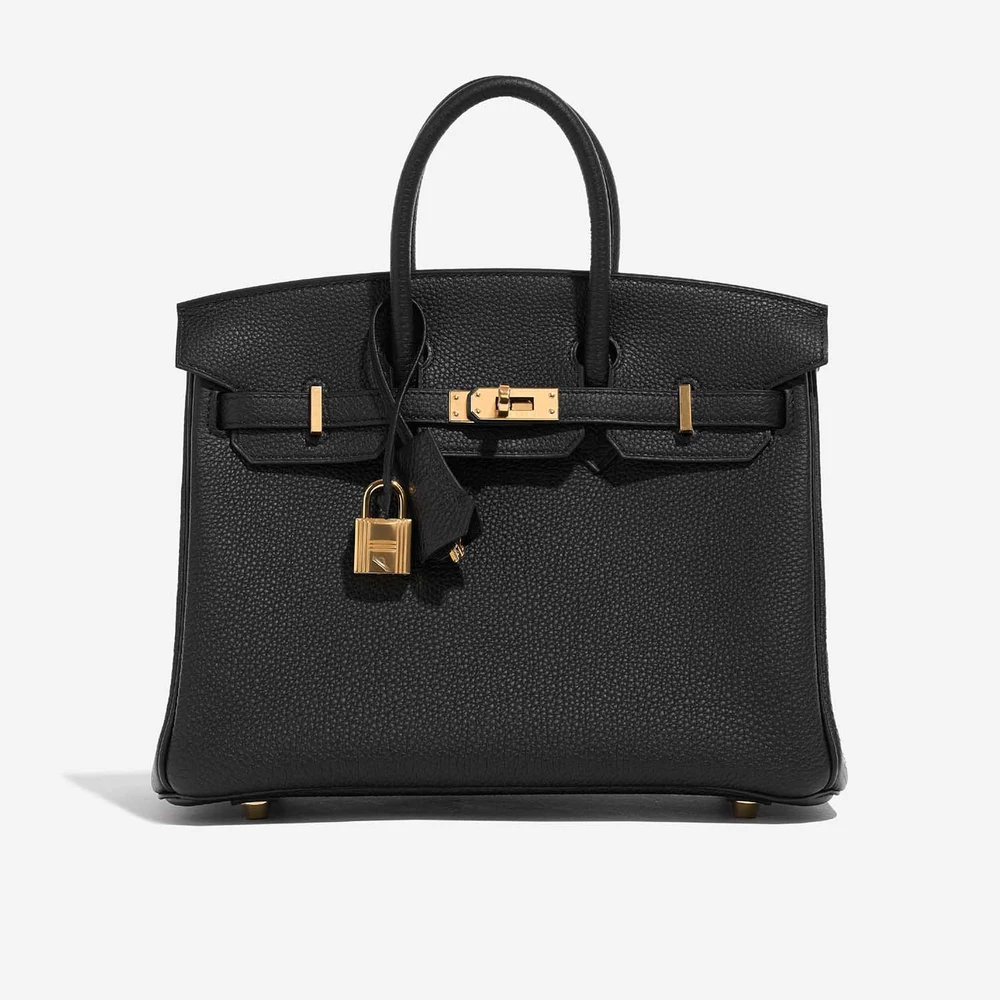
At first glance, the appeal of the Black Birkin is its masterful simplicity. Black is the ultimate neutral—a color that absorbs light and projects authority. It is the sartorial equivalent of a little black dress, serving as a blank canvas that complements any outfit while never competing for attention. However, when paired with the warm, 18-carat glow of Gold Hardware, the black leather transforms. The cold monochrome of a black bag with silver hardware is sharp and modern, but the addition of gold adds a profound sense of heritage and warmth. The gleaming gold palladium, meticulously polished, catches the light, creating a striking contrast against the matte texture of the Togo leather. This juxtaposition between the dark, earthy leather and the radiant metallic clasp and padlock evokes a sense of vintage sophistication, harkening back to the luxury of the 1920s and 1930s.
The true magic of this piece, however, lies not in its aesthetics but in its tactile experience, which is owed to the star of the show: Togo leather. Introduced by Hermès in 1997, Togo is a calfskin leather that has since become the house’s most iconic and beloved material. Its popularity is well-earned. Unlike the pristine, glossy finish of Box calf or the delicate sheen of Swift, Togo features a natural, pebbled grain. This texture is supremely practical; it is highly scratch-resistant, forgiving, and masks the minor wear and tear that comes with daily use, ensuring the bag looks as magnificent on its 50th outing as it did on its first. Furthermore, Togo leather possesses a remarkable suppleness that softens beautifully over time, developing a gentle slouch that allows the rigid structure of the Birkin to relax into an effortless silhouette. The leather is also relatively lightweight compared to other Hermès offerings, a crucial factor for a bag that is built to last a lifetime.
While the materials are exceptional, they are inert without the hands of a master artisan. The "Handcrafted Luxury" promised in the title is not a marketing buzzword; it is a literal reality. The journey of a Birkin bag begins in the tanneries of France, where the leather is selected by a single individual who ensures its consistency and quality. From there, it is entrusted to a single artisan—one person, not an assembly line—who is responsible for the bag from start to finish.
This process, known as the "Maroquinerie" tradition, takes an artisan between 18 and 24 hours to complete. The meticulous work includes hand-stitching using the 'saddle stitch,' a technique borrowed from equestrian saddlery. Using two needles and a single, wax-coated linen thread, the artisan creates a durable, water-resistant seam that will never unravel. Should a thread ever break, the stitch will hold, ensuring the integrity of the bag for generations. Every single stitch is a testament to precision, a detail that can be verified by the subtle slant of the thread. The iconic sangles (straps) are carefully cut, their edges painted and burnished to perfection, while the gold-plated hardware is attached using screws, never glue, allowing for easy replacement and maintenance. This approach ensures that the Black Togo Birkin 25 is not a disposable fashion item, but a heirloom investment, designed to be passed down through generations.
The specific size—the "25"—adds a final layer of desirability. In the current fashion landscape, where excess is being replaced by considered luxury, the smaller dimensions of the Birkin 25 (approximately 25cm x 19cm x 13cm) offer a modern alternative to the larger, more imposing 35 or 40cm versions. It is a bag that feels intimate and personal. It is manageable, proportionate, and easy to carry, yet still spacious enough to hold the daily essentials. The smaller scale shifts the narrative from carrying a bag to wearing a piece of art on the arm.
Ultimately, the Black Togo Birkin 25 with Gold Hardware represents the zenith of handcrafted luxury. It is a piece that requires patience, often presenting itself in the form of a waiting list or a serendipitous encounter at a boutique. It is a reward for the connoisseur who understands that true luxury is not about logos, but about the feel of the leather, the shine of the gold, and the invisible, perfect stitch placed by a single artisan in a workshop in France. It is a beautiful, functional, and enduring masterpiece—a testament to the idea that a bag can be more than a bag; it can be a legacy.
- Get link
- X
- Other Apps


Comments
Post a Comment