The Pinnacle of Precision: The Handcrafted Kelly 25 Sellier in Sable Butler Leather
- Get link
- X
- Other Apps
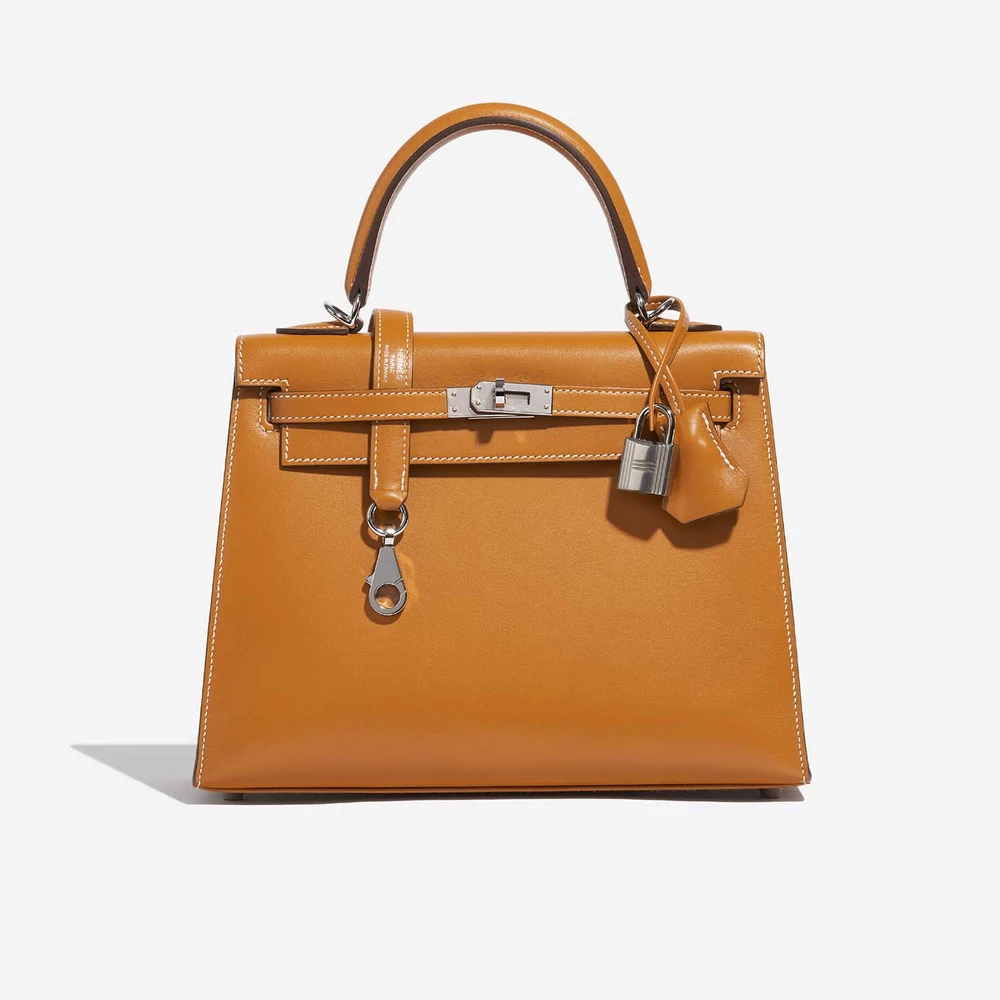
In the pantheon of luxury goods, there exists a hierarchy not just of price, but of patience, skill, and material rarity. At the very apex of this pyramid sits the Hermès Kelly bag. While the Birkin may be the bag of celebrity status and casual opulence, the Kelly is the aristocrat—reserved, architectural, and demanding of a specific reverence. However, within the already rarified air of the Kelly family, certain specifications elevate a handbag from a mere accessory to a collectible artifact. The Handcrafted Kelly 25 Sellier in Sable Butler Leather represents this zenith. It is not merely a bag; it is a masterclass in leatherwork, a testament to a bygone era of craftsmanship, and a piece of functional sculpture that challenges the very definition of what a handbag can be.
To understand the significance of this specific configuration, one must deconstruct its DNA: the size, the construction method, the color, and the leather. Each element is a deliberate choice that speaks to a specific aesthetic philosophy and a deep understanding of Hermès’s heritage.
The Architecture of the Sellier
The first and most defining characteristic of this bag is the "Sellier" construction. In the world of Hermès, bags are generally divided into two categories: Retourné and Sellier. The Retourné style, most commonly seen in the Birkin and softer Kellys, features the stitching turned inward, resulting in rounded edges and a softer, slouchier silhouette. It is the bag of a relaxed weekend in the countryside.
The Sellier, however, is the bag of the boardroom and the opera. Invented in the late 19th century for the original Kelly (then the "Sac Dépêches"), the Sellier technique involves stitching the pieces of leather with the seams facing outward. This creates a rigid, structured frame with sharp, unforgiving angles. The handles stand tall and proud, and the base is flat. It does not slouch; it stands to attention.
Crafting a Sellier bag requires a level of precision that borders on the obsessive. The artisan must assemble the bag “inside out” on a wooden mold called a forme. After the pieces are stitched together, the bag is turned right-side out. This process, known as retourner, is incredibly stressful on the material. For the Sellier to maintain its crystalline structure, the leather must be firm, and the stitching must be flawless. There is no room for error; a single millimeter of miscalculation will result in a distorted shape. The edges are then painted and polished to a glass-like finish, further emphasizing the architectural rigidity of the piece. The final result is a handbag that resembles a miniature piece of art deco furniture—usable, but undeniably sculptural.
The Rarity of Scale: The Kelly 25
When we add the "25" to the designation, we are referring to the length of the bag in centimeters. While the Kelly 32 and 35 have long been favorites for their everyday utility, the Kelly 25 has emerged in recent years as the holy grail for collectors. It represents the perfect balance between functionality and aesthetic proportion.
A 25cm Sellier is incredibly compact. It is the size of a small briefcase, but its proportions are so perfect that it looks substantial on the arm. The smaller scale intensifies the architectural quality of the Sellier style. On a larger bag, the rigid lines can sometimes feel heavy; on the 25, they are "crisp." It requires the wearer to edit their possessions—a card holder, a lipstick, and a phone is about the extent of its capacity—which is precisely the point. The Kelly 25 Sellier is an accessory of discipline. It suggests that the owner is decisive, curated, and values quality over quantity. Furthermore, due to the reduced surface area, the grain and quality of the leather must be absolutely pristine, as there is less material to hide any imperfections.
The Alchemy of Color: Sable
Hermès is as famous for its color palette as it is for its leather. Color names like "Orange," "Bleu Jean," and "Rouge H" are legendary. However, Sable is a color that exists in a more subtle, nuanced realm. In French, "Sable" means sand, but in the context of Hermès, it is often interpreted as a pale, muted beige with an underlying warmth.
However, the beauty of Sable is its chameleonic nature. In the soft light of morning, it appears as a delicate, creamy ivory. Under the harsh glare of direct sunlight, it reveals a slight golden undertone, reminiscent of the desert or, appropriately, fine sand. In the evening under artificial light, it takes on a cooler, almost greige (gray-beige) tone.
This neutrality is its superpower. While a bright pink or a deep blue bag makes a statement about the wearer, Sable makes a statement about the bag itself. It allows the craftsmanship—the stitching, the hardware, the structural lines—to take center stage. It is the ultimate "blank canvas" that matches almost any wardrobe, yet its specific shade is complex enough that it never looks ordinary. It is the color of minimalist luxury, favored by those who wish to whisper rather than shout.
The Holy Grail of Texture: Butler Leather
If the Sellier construction is the architecture and Sable is the atmosphere, then Butler Leather is the soul. This is where the specific configuration of this bag enters the realm of mythos.
For those who study Hermès, the name "Butler" evokes a specific era of manufacturing. It is a semi-matte calfskin leather that was originally produced for Hermès by the legendary Haas tannery (which the brand later acquired). What makes Butler so special is its combination of durability and a unique, waxy finish.
Unlike the shiny, polished patent-like finish of Box Calf, or the structured grain of Epsom, Butler has a soft, natural sheen that feels almost organic. It is a "pulled-up" leather, meaning when it is stretched or bent, the oils and dyes within the leather shift, causing the color to lighten slightly at the tension points. This gives the bag a living, breathing quality. As it ages, Butler leather develops a rich patina that is highly sought after by connoisseurs. It does not crack like older Box Calf can, nor does it look plastic-like. It feels like a well-worn saddle—supple yet substantial.
However, the true rarity of Butler lies in its scarcity. Hermès ceased regular production of Butler leather for a significant period. While there has been a recent revival of the leather on a very limited basis, bags crafted in Butler from the early 2000s are considered "vintage" and are incredibly rare. Furthermore, because Butler is a delicate, matte leather, it is notoriously difficult to work with. It marks easily during the crafting process, requiring the artisan to work with surgical precision and clean hands. The slightest scratch from a fingernail or a drop of water during construction could ruin the hide. Consequently, a Sellier bag in Butler—a style that requires the leather to be turned inside out and stressed during construction—is a feat of engineering. The artisan must be a master to produce a bag with sharp edges and a flawless surface using a leather that is notoriously unforgiving.
The Alchemy of Hardware and Stitching
No discussion of this bag would be complete without mentioning the supporting cast: the hardware and the stitching. In the classic configuration, this bag is often paired with Gold (Permabrass) hardware. The warm yellow-gold of the palladium-free brass is the perfect complement to the warm beige of the Sable, creating a seamless, monochromatic harmony. The hardware—the turn-lock closure, the D-rings, the sangles (straps), and the keys—are not merely functional. They are hand-engraved and plated, adding weight to the piece that reinforces its quality.
Then there is the saddle stitching. Hermès uses a technique called the "saddle stitch," where two needles are passed through the same hole from opposite directions. This is done entirely by hand, using a hammer and an awl. It is a slow, painstaking process, but it creates a stitch that is not only beautiful but virtually indestructible. If a machine stitch breaks, the entire seam unravels. If a saddle stitch breaks, the individual stitch remains isolated, and the seam holds. The thread used is a heavy, waxed linen that gleams against the Sable leather, providing a subtle textural contrast. The number of stitches per centimeter is strictly regulated, contributing to the symmetrical perfection of the bag.
The Investment and The Legacy
To commission or acquire a Handcrafted Kelly 25 Sellier in Sable Butler Leather is to join an elite club of collectors. In the current market, the rarity of the leather and the desirability of the size create a perfect storm of value. While the retail price from Hermès (should one be lucky enough to be offered such a bag) is substantial, the resale value at auction or via private dealers often exceeds it significantly, positioning this specific bag as a "blue-chip" asset.
Yet, to view it solely as an investment is to miss the point. This bag is a preservation of craft. In a world of mass production and "fast fashion," the Hermès Kelly represents the antithesis. It takes approximately 18 to 25 hours of labor to create a single Kelly, spread over months of training and years of experience. The artisan who makes this bag signs and dates it, creating a direct lineage between the creator and the owner.
Owning this bag is a responsibility. Butler leather requires careful maintenance; it is susceptible to water spots and requires careful storage away from direct sunlight to prevent fading. It demands to be handled with clean hands. However, this vulnerability adds to its charm. It is a living material that will tell the story of its owner over decades. The patina that develops, the slight darkening of the handles from the natural oils of the hand, and the softening of the leather over time are all part of a journey.
Conclusion
The Handcrafted Kelly 25 Sellier in Sable Butler Leather is far more than the sum of its parts. It is a synthesis of the rarest materials and the highest level of human skill. The sharp angles of the Sellier style are softened by the warm, sandy hue of Sable, while the delicate nature of the Butler leather is mastered by the artisan's hand.
In a world chasing the "It" bag of the season, this Kelly stands as a monument to timelessness. It will never look dated; its design is a classic that has remained unchanged for nearly a century. It embodies the Hermès philosophy of "Luxury is that which is made by time." For the fortunate few who possess it, the bag becomes a companion for a lifetime—a silent, elegant witness to life's significant moments. It is not just a handbag; it is the ultimate expression of understated perfection, a masterpiece of leather craftsmanship that transcends fashion and enters the realm of art.
- Get link
- X
- Other Apps


Comments
Post a Comment