The Anatomy of the Kelly 35 in Togo Chocolate Leather with Gold Hardware
In the realm of luxury goods, few objects command the quiet reverence, mystique, and enduring desire of an Hermès handbag. At the absolute apex of this legacy sits the Kelly bag—an architectural marvel of design that merges equestrian roots with high-fashion royalty. Among its many iterations, the Kelly 35 in Togo Chocolate leather with Gold Hardware represents a masterclass in understated elegance. It is a configuration that bridges the gap between historical craftsmanship and practical, modern utility, serving as a cornerstone piece for collectors and connoisseurs worldwide.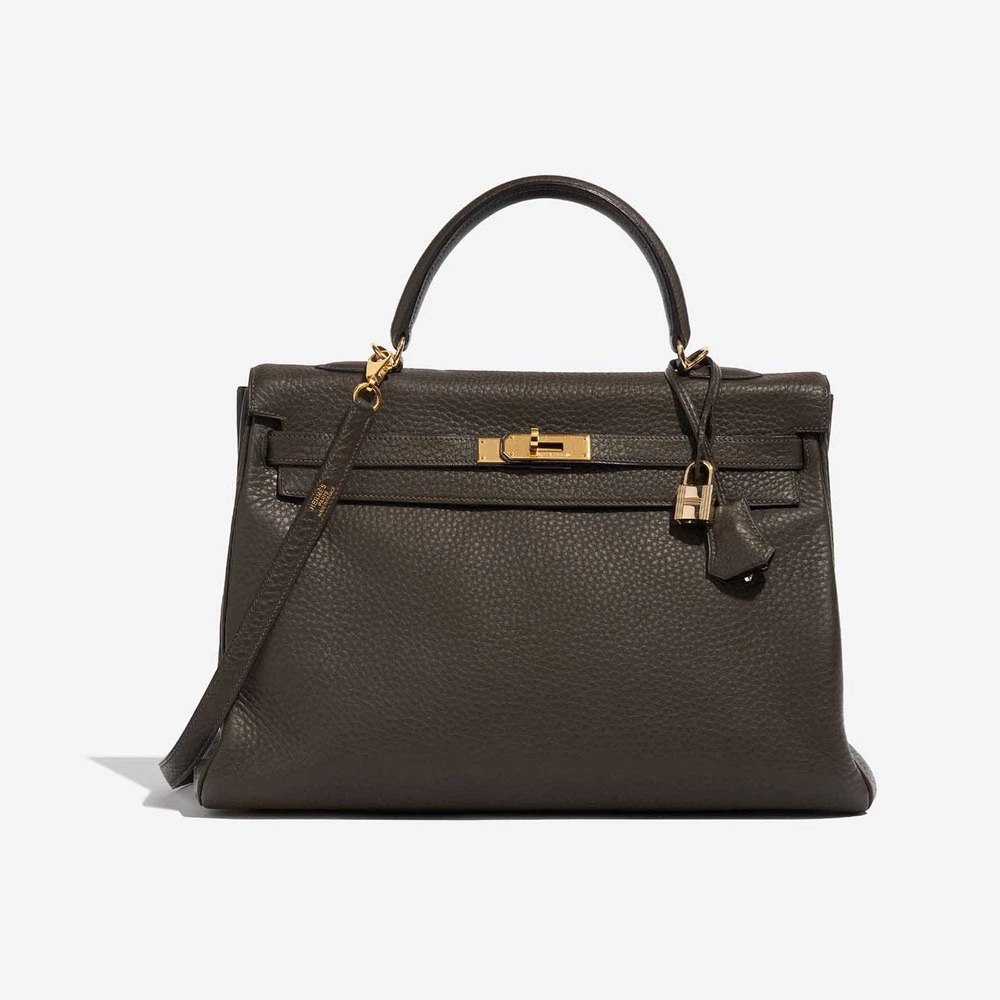
1. The Legacy of the Kelly: From Saddle Bag to Royal Icon
The lineage of the Kelly bag dates back to the late 19th century when Hermès was primarily celebrated as a premier harness and saddlery maker for the European elite. In 1892, the atelier introduced the Haut à Courroies (HAC), a large, sturdy leather bag designed specifically to carry a rider’s saddle, boots, and riding gear.
Decades later, in the 1930s, Émile-Maurice Hermès’s son-in-law, Robert Dumas, recognized a shifting cultural landscape. Anticipating the modern woman’s need for functional yet sophisticated everyday accessories, Dumas redesigned the core structural elements of the HAC into a smaller, trapezoidal handbag originally known as the Sac à Dépêches.
The bag’s trajectory changed forever in 1956. Grace Kelly, the Hollywood icon turned Princess of Monaco, famously used her Sac à Dépêches to shield her early pregnancy from persistent paparazzi. When the photograph flashed across the covers of magazines globally, the public instantly dubbed it the "Kelly" bag. Though Hermès officially renamed it in 1977, the bag had already cemented its status as an immortal cultural artifact.
2. The Artistry of Togo Leather
To understand the Kelly 35 is to understand the meticulous selection of materials that defines the Hermès maison. Crafted from Togo leather—derived from baby calfskin—this material is heavily favored for its unique balance of durability, resilience, and sensory pleasure.
The Grain and Texture: Named after the African nation, Togo leather features a prominent, natural pebbled grain (known as grain) that is achieved through a specialized tumbling process. This texture gives the leather a distinct depth, preventing it from looking flat or overly manufactured.
Scratch Resistance and Resilience: Unlike box calf leather, which demands delicate handling, Togo is remarkably forgiving. Its textured surface naturally masks minor scuffs and daily wear, making it an ideal choice for a bag intended to be worn and lived in rather than locked away.
Structure and Slouch: In a 35cm size—which leans toward the larger, more capacious end of the Kelly spectrum—Togo provides enough structural integrity to maintain the sharp trapezoidal lines of the Retourne construction while acquiring a softer, more relaxed silhouette over time.
3. The Richness of Chocolate and the Warmth of Gold
Color pairing within Hermès creations is treated as a high art form. The Chocolate shade (Chocolat) is a deep, complex, and earthy dark brown. Unlike absolute black, which can sometimes present a harsh contrast, Chocolate possesses a rich warmth that shifts dynamically under different lighting conditions—appearing deeply espresso indoors while revealing softer, cocoa undertones in natural daylight.
This warmth is flawlessly complemented by Gold Hardware (GHW). Plated in real gold, the hardware elements—including the iconic touret (turnlock), the sangles (straps), the plaque, the padlock, and the feet (clous) at the base—provide a radiant contrast against the dark brown leather. The combination of Chocolate and Gold evokes a timeless, vintage-inspired aesthetic that feels simultaneously grounded, opulent, and endlessly versatile across seasonal wardrobes.
4. Anatomy of Craft: One Artisan, Twenty Hours
The true core of heritage craftsmanship lies in the human element. Unlike mass-produced luxury goods, every single Hermès Kelly bag is constructed entirely by hand by a single artisan in one of the brand's specialized French ateliers.
Apprenticeship and Mastery: An artisan must undergo years of rigorous training—often spending up to 18 months mastering the specific techniques required for a Kelly bag—before they are permitted to assemble one for the market.
The Saddle Stitch: The construction relies heavily on the traditional dual-needle saddle stitch. Using durable linen thread coated in beeswax, the artisan creates a stitch that is structurally interlocking; if one thread were to somehow break over decades of use, the entire seam would not unravel.
The Assembly: Building a Kelly 35 involves working with roughly 36 distinct pieces of leather. The process requires anywhere from 18 to 20 hours of uninterrupted, highly concentrated physical labor. From beveling and sanding the edges to sealing them with layers of hot-applied varnish, every phase is executed by hand with microscopic precision.
The Artisan Stamp: Upon completion, the craftsman embosses a discreet code onto the bag—a combination of letters and shapes indicating the year of manufacture, the workshop identifier, and the artisan’s individual signature mark.
5. The Kelly 35 as a Modern Investment
In contemporary fashion, the Kelly 35 occupies a unique niche. While micro-bags dominate trends, the 35cm size is a celebration of utility and classic proportions. It is spacious enough to accommodate a tablet, daily planners, cosmetics, and lifestyle essentials, making it an exceptional companion for travel, business, or elevated day-to-day wear.
Furthermore, pieces like the Kelly 35 in Togo Chocolate with Gold Hardware transcend seasonal fluctuations. Because Hermès tightly controls production outputs and maintains uncompromising standards of traditional handcrafting, these bags frequently command strong retention and appreciation on the secondary market. They are viewed less as accessories and more as tangible pieces of functional art—heirlooms designed to be passed down through generations.
Conclusion
The Kelly 35 in Togo Chocolate Leather with Gold Hardware is much more than a status symbol; it is a testament to an era before fast fashion, standing as a monument to slow, deliberate creation. By marrying the equestrian utility of the 1900s, the cinematic glamour of Grace Kelly, and the unyielding standards of French leatherworking, this bag achieves permanent relevance. It remains a masterwork of heritage craftsmanship that speaks softly, yet carries an unmistakable legacy.


Comments
Post a Comment