Heritage Barenia Faubourg Birkin 30: Hand-Stitched Luxury in Fauve
Within the upper echelons of global luxury, few items command the reverent awe of a Hermès Birkin. Among the vast array of leathers, colors, and hardware combinations produced by the historic Parisian maison, certain configurations rise above the rest to achieve legendary status. At the pinnacle of this hierarchy sits the Heritage Barenia Faubourg Birkin 30 in Fauve.
Blending centuries-old equestrian traditions with modern refinement, this specific iteration is more than a handbag—it is a wearable piece of art, an investment in craftsmanship, and a testament to the enduring allure of quiet luxury.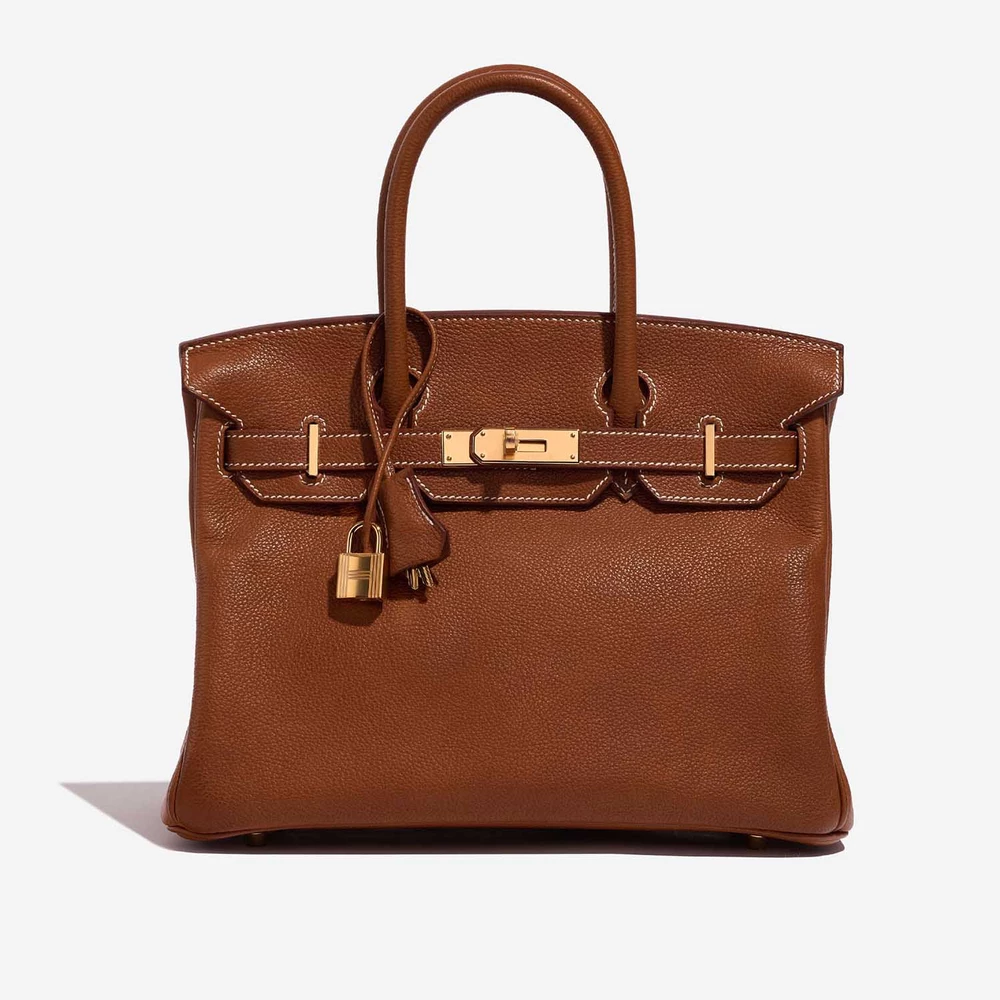
The Genesis of Barenia and the Evolution of Faubourg
To truly appreciate a Barenia Faubourg Birkin, one must understand the rich history of the material itself. Traditional Barenia leather is a historical touchstone for Hermès. Originally utilized for high-end equestrian saddles, it is a calfskin soaked in a rich blend of natural oils and vegetable tannins over a prolonged period. This meticulous process imbues the hide with a distinct, waxy hand-feel, a subtle natural sheen, and an intoxicating, authentic leather aroma that sets it apart from standard chrome-tanned leathers.
However, traditional Barenia is famously delicate. It is a "living" leather that scratches easily and demands careful maintenance, though it rewards its owner by developing a breathtaking, deep patina over time.
Recognizing the desire for this classic heritage while addressing the demands of modern, fast-paced lifestyles, Hermès introduced Barenia Faubourg. Named after the prestigious Parisian flagship address at 24 Rue du Faubourg Saint-Honoré, this evolved iteration introduces a subtle, refined grain to the leather’s surface.
The benefits of Barenia Faubourg are manifold:
Enhanced Resilience: The fine grain structure provides superior resistance against everyday light scratches, scuffs, and fingerprints.
Structural Integrity: It offers a slightly firmer, more upright posture compared to the ultra-supple traditional Barenia, ensuring the bag maintains its crisp silhouette.
Controlled Aging: While it still develops a magnificent, understated patina over years of wear, it ages with a more uniform, nuanced grace.
Fauve: The Quintessential Hermès Shade
The magic of this specific Birkin is amplified tenfold by its color: Fauve. Meaning "tawny" in French, Fauve is a rich, warm, golden-brown hue that serves as a direct nod to Hermès’ saddle-making roots.
Fauve is widely considered the ultimate spiritual color for Barenia leather. It possesses an incredible depth and transparency, allowing the natural grain and undertones of the calfskin to shine through. Under different lighting conditions, Fauve shifts from a bright, vibrant caramel to a deep, rich chestnut. Paired with the signature contrast white or tonal saddle stitching, the color pops with a crisp, classic elegance that instantly identifies the piece as an authentic masterpiece of French leathercraft.
The Gold Standard: The Birkin 30 Proportion
While Birkins are crafted in sizes ranging from the diminutive 25 to the expansive 40, the Birkin 30 is universally heralded as the gold standard of the lineup.
Measuring 30 centimeters across, it strikes a flawless ergonomic balance. It offers ample interior capacity to carry all daily essentials—including a tablet, cosmetics case, keys, and a smartphone—without transforming into an unwieldy weekender.
Unlike larger variations that are strictly handheld, the Birkin 30 can be worn effortlessly on the forearm or carried gracefully by hand. It transitions fluidly from a structured daytime professional companion to an understated, elegant statement piece at an evening dinner.
The Art of Hand-Stitched Luxury
What truly separates a mass-market luxury accessory from a true Hermès heirloom is the human element. Every Birkin is constructed entirely by a single artisan from start to finish—a process that can take upward of 18 to 25 hours of meticulous labor.
The Saddle Stitch: Utilizing the traditional two-needle saddle stitch technique pioneered by Hermès harness makers centuries ago, the artisan threads waxed linen thread through pre-punched holes. Because the thread crosses over itself inside the leather, a saddle stitch will not unravel even if a single stitch is cut or worn through.
Edge Painting and Polishing: The raw edges of the Barenia Faubourg leather are meticulously painted, sealed, and polished by hand through multiple layers until they are completely smooth and glass-like.
Hardware Integration: Whether accented with gleaming gold-plated hardware or bright, scratch-resistant palladium, the metal components—the lock, keys, clochette, and toggle closure—are engineered to exact specifications, fitting together with a satisfying, precise mechanical click.
Investment, Legacy, and Collector Appeal
The Heritage Barenia Faubourg Birkin 30 in Fauve occupies a unique space in the secondary market. Because Hermès strictly controls production quantities and allocates pieces only to clients with deeply established purchase histories, acquiring one directly from a boutique is exceptionally rare.
Consequently, its status on the resale and collector market remains remarkably robust. Connoisseurs covet Barenia Faubourg because it invites use. Unlike exotic skins or delicate box calf leather that require kid-glove handling, a Barenia Faubourg Birkin is built to be lived with. Every scuff buffed away by the natural oils of the skin, and every season of darkening patina, tells a personal story unique to the owner.
Conclusion
The Heritage Barenia Faubourg Birkin 30 in Fauve is far more than a status symbol. It is a masterclass in leather craftsmanship, bridging the gap between historical utility and modern luxury. For the discerning collector, it represents the absolute zenith of what Hermès stands for: uncompromising quality, timeless design, and an object designed to transcend generations.


Comments
Post a Comment