The Hermès Herbag Zip 31 – Ébène Vache Hunter & Circuit 24 H Plume Canvas: A Study in Subtle Subversion
In the rarified atmosphere of luxury fashion, few names command the reverence, the mystique, and the unyielding desirability of Hermès. For the uninitiated, the brand is synonymous with the Birkin and the Kelly—the ultimate status symbols, the investment pieces that adorn the arms of celebrities and line the walls of private safes. However, for the true connoisseur, the quietest pieces in the Hermès oeuvre often whisper the loudest statements. It is in the margins, in the reinterpretations, and in the playful departures from the iconic silhouettes that the house reveals its true wit and craftsmanship. Enter the Hermès Herbag Zip 31 – Ébène Vache Hunter & Circuit 24 H Plume Canvas, a bag that challenges the very notion of what an Hermès bag should be.
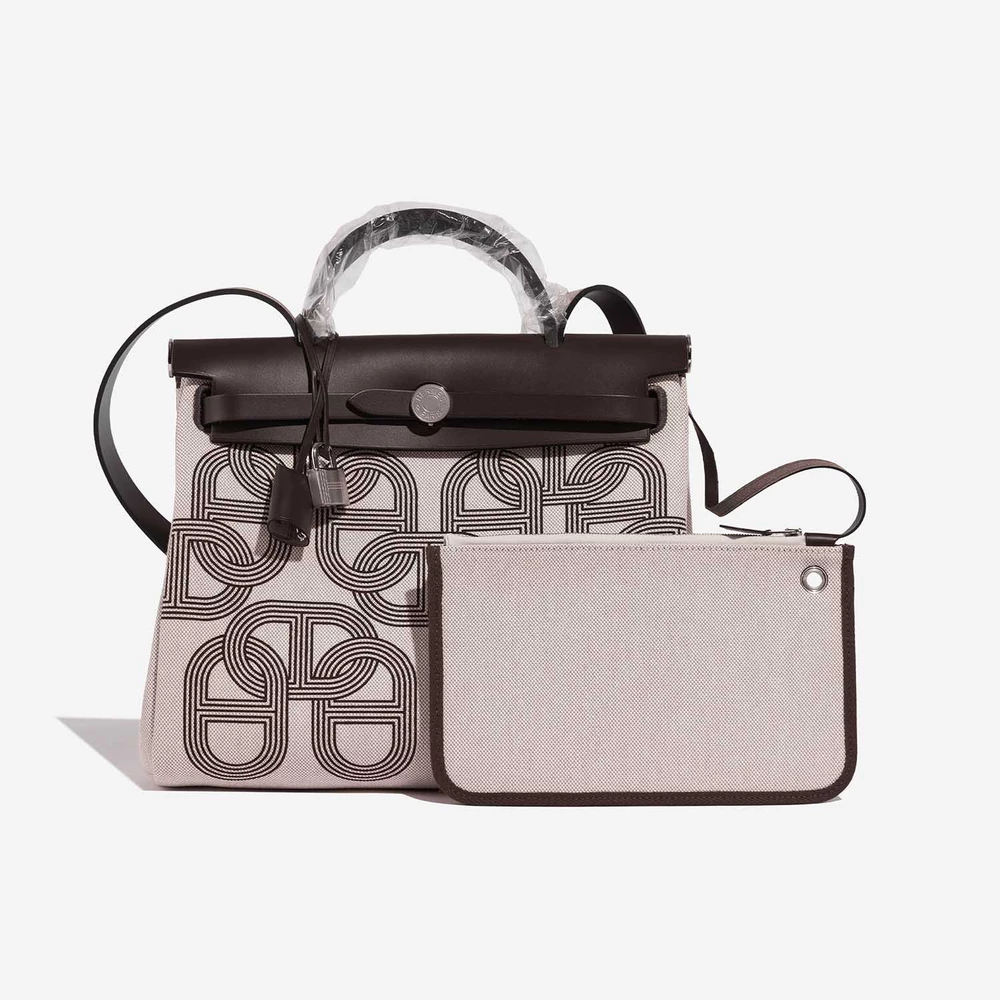
At first glance, the Herbag may seem like a simple, utilitarian cousin to the legendary Kelly. The silhouette is familiar—a rigid trapezoid, a top handle, a flap closure, and a shoulder strap. But to dismiss the Herbag as merely a "budget Kelly" or a "starter Hermès" is to fundamentally misunderstand its purpose. The Herbag is not a consolation prize; it is a deliberate philosophical statement. It is a bag that deconstructs the grandeur of the Kelly, stripping away the layers of formality and replacing them with a rugged, casual elegance that is distinctly modern.
The specific iteration we are examining, the Herbag Zip 31 in Ébène Vache Hunter and Circuit 24 H Plume Canvas, is arguably the pinnacle of this philosophy.
The Anatomy of Contrast: Materials
The true beauty of the Herbag Zip 31 lies in the tension between its two primary materials: the leather and the canvas.
Ébène Vache Hunter: The leather used for the base, handles, and strapping is Vache Hunter. This is a crucial detail for any Hermès aficionado. Vache Hunter is a rich, natural cowhide that is tanned using a traditional vegetable-tanning process. Unlike the sleek, polished finish of Epsom or the supple softness of Togo, Vache Hunter possesses a distinct, almost raw texture. It is a robust leather, originally designed for hunting bags—hence the name "Hunter." It is resilient, water-resistant, and uniquely susceptible to the patina of time.
In the color Ébène, this leather takes on a profound darkness. It is not a harsh, stark black, but a deep, smoky, root-beer brown. It is a color that absorbs light, lending the bag an air of understated gravity. The Vache Hunter is not a leather that aims to impress immediately; it is a leather that promises to age beautifully. It will soften slightly with use, the edges will burnish, and the natural grain will become more pronounced. It is the antithesis of the "fast fashion" aesthetic. It demands to be held, to be used, to be lived with.
Circuit 24 H Plume Canvas: If the Vache Hunter provides the gravitas, the Circuit 24 H Plume Canvas provides the verve. This is the element that takes the bag from a classic silhouette into the realm of artistic expression. Hermès is famous for its historical ties to the equestrian world, and "Circuit 24" is a direct homage to that heritage. The design is an abstract pattern of intricate lines, circles, and arcs, echoing the dynamic movement of a horse-racing track or the complex diagrams of a riding arena.
"Plume" refers to the specific weave of the canvas—a fine, resilient, and tightly woven fabric that is both durable and lightweight. The canvas is a critical component of the Herbag’s identity. It signals a democratization of luxury. The combination of expensive, exquisitely crafted leather with a utilitarian, rugged canvas breaks the rigid mold of what a "luxury bag" is expected to be. It is a playful juxtaposition. The Circuit 24 H pattern, likely rendered in a tonal or subtly contrasting palette against the Ébène leather, adds a layer of visual texture that is incredibly rich. It prevents the bag from looking too severe, injecting a dose of youthful energy and graphic modernity into the otherwise classic form.
The Functionality of Form
The Herbag Zip 31 is not merely a beauty to behold; it is a bag designed for use. The "31" refers to the size, measuring approximately 31 cm in width—a perfect medium, capacious enough for daily essentials but structured enough to avoid looking bulky.
The "Zip" in the name distinguishes this model from its predecessor. The original Herbag featured a strap-and-flap closure similar to the Kelly. The updated "Zip" version adds a zipper closure above the flap. This is a significant ergonomic upgrade. It allows the owner to secure the bag quickly without fiddling with the straps every time, offering peace of mind and ease of access in an urban environment.
The bag features the classic "passe-guide" straps—the leather straps that pass through metal loops to secure the flap. On the Herbag, these are often finished with a cleverly designed metal buckle that acts as a lock, adding a tactile, ritualistic quality to the opening of the bag. It is a design element that fosters intimacy with the object; the act of using the bag becomes a small, satisfying ceremony.
The interior is fitted with a practical hanging pocket, and the exterior features a gusseted back pocket, perfect for stowing a phone or travel pass. The leather handle is rigid and structured, ensuring a comfortable carry, while the adjustable canvas shoulder strap allows for cross-body or shoulder wear. This versatility is key to the Herbag’s appeal—it transitions seamlessly from a structured briefcase for the office to a relaxed cross-body bag for a weekend jaunt.
A Subversive Spirit
This is where the Herbag’s brilliance lies. It is inherently subversive. It takes the holy grail of handbag design—the Kelly—and removes the elements that make it so precious. It replaces the meticulously matched alligator or crocodile skins with durable canvas. It replaces the delicate, feminine refinement with a rugged, androgynous utilitarianism. It is, in a way, an act of rebellion.
The Birkin and the Kelly are aspirational objects. They are often locked away, brought out only for special occasions, and meticulously babied. The Herbag, however, invites the wearer to use it. It is the bag you can take on the subway (yes, Hermès does go on the subway). It is the bag you can pack with a laptop, a book, and a water bottle without feeling guilty. It is designed for the modern, dynamic lifestyle where luxury is no longer defined by preciousness but by functionality and craftsmanship.
In a world obsessed with logos and screaming brand identity, the Herbag is remarkably quiet. The "Hermès" stamp is discreet. The iconic H-buckle is present but understated. The recognition of the bag often comes not from the casual observer but from the educated eye—the person who knows what Vache Hunter leather is, who understands the history of the Circuit 24 pattern, who recognizes the superior craftsmanship of the saddle stitching.
The Ethos of Craftsmanship
As with all Hermès products, the quality of the Herbag is non-negotiable. The leather is carefully selected for its grain and lack of flaws. The canvas is woven to exacting standards. The hardware—typically plated brass or palladium—is heavy and robust. The stitching is immaculate, executed with the traditional saddle stitch, using two needles and waxed thread to ensure that the seams will never unravel. This is the real value of Hermès. It is not just the design; it is the profound respect for the materials and the artisans who shape them.
The Herbag Zip 31 is a testament to the brand’s ability to evolve without losing its soul. It acknowledges that luxury is not static. It adapts to the changing rhythms of life while maintaining the highest standards of execution.
Conclusion
The Hermès Herbag Zip 31 in Ébène Vache Hunter and Circuit 24 H Plume Canvas is more than a handbag. It is a wearable philosophy, a statement of values. It declares that the wearer has an appreciation for heritage but is unafraid of modernity. It suggests a taste for quality that is not reliant on ostentation. It is a bag for the discreet, the cultured, and the purposeful.
To own this Herbag is to understand that true luxury lies in the details—in the feel of the vegetable-tanned leather, in the artistry of the printed canvas, and in the perfect balance between utility and beauty. It is the epitome of quiet luxury, a piece that offers a lifetime of companionship to the person who carries it. It is not just an accessory; it is a narrative of life, lived elegantly and without pretense. It is, in every sense of the word, a masterpiece of subtle subversion.


Comments
Post a Comment