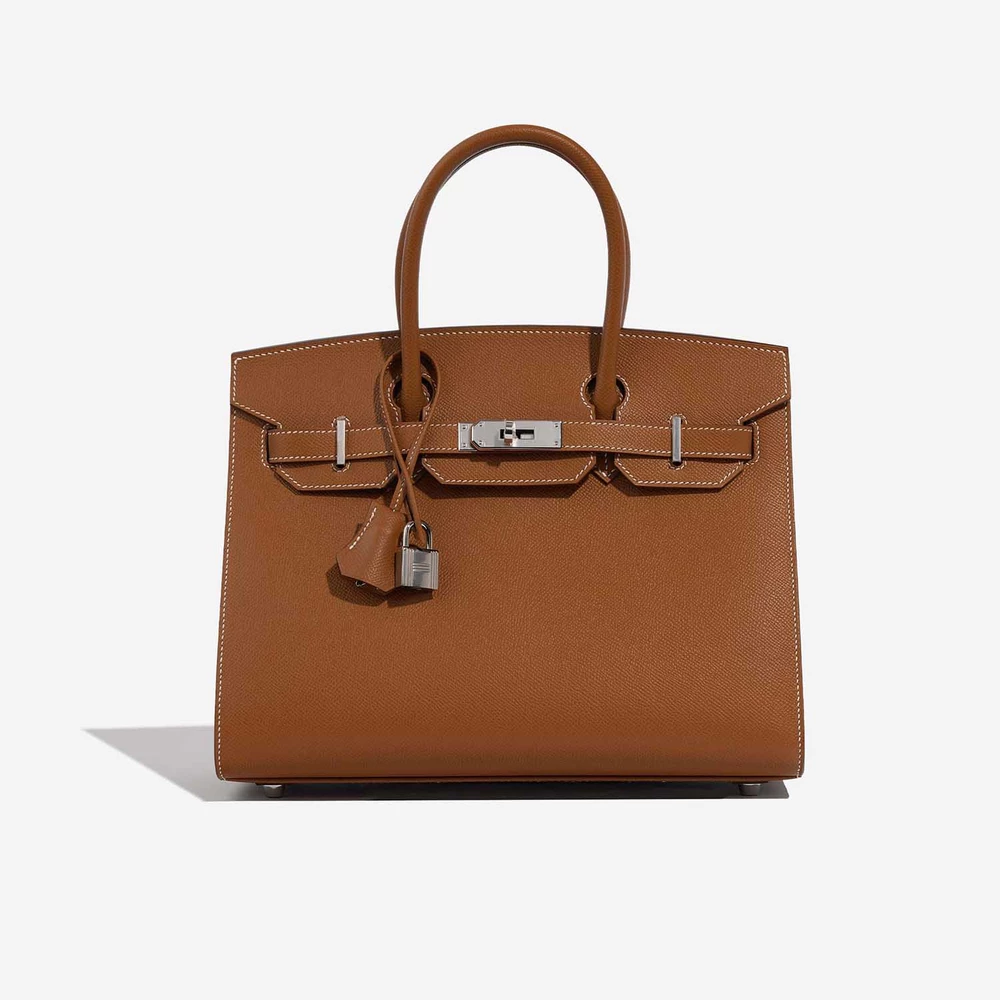
The Gold Epsom Birkin 30: A Masterclass in Hand-Stitched Leather and Palladium Precision
- Get link
- X
- Other Apps
In the pantheon of luxury goods, few objects command the same level of reverence, desire, and investment potential as the Hermès Birkin bag. It is more than an accessory; it is a cultural artifact, a symbol of discerning taste, and a testament to the enduring power of artisanal craftsmanship. Among the myriad variations of this iconic bag, the Gold Epsom Birkin 30 stands as a particularly compelling archetype. It is a harmonious convergence of heritage, material innovation, and timeless aesthetics, specifically defined by its hand-stitched leather construction and the cool, modernist gleam of its palladium hardware.
To understand the allure of the Gold Epsom Birkin 30 is to dissect a masterpiece of functional art, layer by layer—from the tanning pits of France to the ateliers of master artisans who dedicate their lives to a single, perfect stitch.
The Foundation: The Birkin 30 as the Perfect Proportion
Before delving into the specifics of the leather and hardware, it is essential to appreciate the canvas itself: the Birkin 30. The numerical designation refers to the size of the bag in centimeters, measuring approximately 30cm wide, 22cm high, and 16cm deep. For many connoisseurs, the 30cm is the "Goldilocks" size of the Birkin family. It strikes a perfect equilibrium between the smaller, more formal 25cm and the larger, more casual 35cm and 40cm iterations.
The Birkin 30 is versatile. It possesses enough volume to serve as a practical everyday bag, capable of holding a tablet, a small notebook, a wallet, and daily essentials, yet it retains a refined silhouette that does not overwhelm the frame. It is equally at home in a boardroom as it is at a weekend brunch. This proportionality allows the material and hardware to shine without the distraction of an overly cumbersome or diminutive shape. It is the quintessential representation of the Birkin’s original design inspiration—born from a chance encounter between Jane Birkin and Jean-Louis Dumas on a 1981 Air France flight. It was designed to be a practical, capacious, yet elegant travel companion.
The Skin: An Exploration of Epsom Leather
The "Gold" in the name refers to the specific colorway—a rich, warm, honey-toned brown that is one of Hermès’ most classic and revered shades. It is a versatile neutral that acts as a chameleon, complementing the starkest monochrome wardrobe while simultaneously warming up more colorful ensembles. However, the real story lies in the leather itself: Epsom.
Epsom leather is a relatively modern addition to the Hermès tannery repertoire, first introduced in the 1990s. Unlike the smooth, supple nature of Togo or the glossy finish of Box Calf, Epsom is a pressed leather. It is created through a process where the grain is embossed with a fine, cross-hatched pattern. This technique is not merely cosmetic; it serves a profound functional purpose.
The pressing process compresses the leather fibers, resulting in a hide that is exceptionally lightweight, rigid, and scratch-resistant. For the owner of a Birkin 30, this is a practical triumph. The bag maintains its structured, architectural shape even when empty, preventing the slouching that can occur with softer leathers. Furthermore, the textured surface acts as a protective shield, making the bag remarkably resilient against the minor scuffs and abrasions of daily life. A stray fingernail or a brush against a zipper is far less likely to leave a permanent mark on Epsom than on a smooth leather.
This durability ensures that the "Gold" color retains its vibrancy for decades. Because the surface is resistant to wear, the pigmentation remains intact, preserving the bag's pristine appearance. The lightness of the leather also means that the Birkin 30, despite its hardware and structure, remains relatively easy to carry. However, it must be noted that Epsom is a more rigid leather, which influences the tactile experience of the bag. It offers a firm, solid feel in the hand rather than the buttery, slouchy softness of other hides. It is a leather built for longevity and architectural precision, making it a favorite among collectors who value function alongside form.
The Art of the Hand-Stitch: The Saddle Stitch Legacy
Perhaps the most defining characteristic of an authentic Hermès Birkin—and the element that truly separates it from mere mass-produced luxury—is the construction method. The Gold Epsom Birkin 30 is not sewn by a machine; it is meticulously hand-stitched using a technique known as the "saddle stitch."
This is the traditional method used by Hermès since the 19th century, inherited from the equestrian world of saddle and bridle making. The saddle stitch involves using two needles simultaneously, passing one thread through the same hole from opposite directions. This creates a loop that locks the thread in place. The result is a seam that is exponentially stronger and more durable than a standard machine lock-stitch. If one part of the thread breaks, the rest of the stitch remains intact, ensuring the bag's structural integrity for a lifetime—or several.
The process is incredibly labor-intensive. A single artisan, known as a "sellier," will spend hours, if not days, meticulously piercing the holes with an awl and threading the needles. The Epsom leather, being pressed and rigid, requires even greater precision during this process to ensure the stitch lines are flawlessly straight and the tension is perfectly balanced.
This hand-stitching does not just provide structural strength; it creates a subtle, organic imperfection that is the hallmark of human craftsmanship. The slight undulation of the thread, the angle of the stitch, and the tactile presence of a seam sewn by hand—these are the details that connoisseurs scrutinize and prize. It imbues the bag with a soul that is absent in machine-stitched products. When a client purchases a Gold Epsom Birkin 30, they are not buying a product churned out by a factory; they are buying the accumulated skill and time of a master artisan who has trained for years to perfect this one specific task.
The Contrast: The Palladium Hardware
If the Gold Epsom leather represents warmth and heritage, the palladium hardware offers a striking counterpoint of modernist cool. Palladium is a rare, lustrous silvery-white metal that belongs to the platinum group of metals. Unlike gold-plated hardware, palladium offers a unique combination of aesthetic and functional benefits that profoundly elevate the Birkin 30.
From a design perspective, the palladium hardware provides a necessary visual contrast against the rich, warm Gold leather. While gold hardware can sometimes create a monolithic, overly traditional look, palladium injects a dose of contemporary sophistication. It cools down the warmth of the leather, making the bag more versatile and wearable with modern, minimalist wardrobes. The cool, gunmetal sheen of the palladium attracts light, creating a beautiful visual interplay with the textured leather.
Functionally, palladium is a champion of durability. It is one of the hardest precious metals, highly resistant to corrosion, tarnishing, and scratching. The hardware on a Birkin—including the classic turn-lock closure, the padlock, the clochette, and the protective feet—is subjected to significant wear. Palladium ensures that these elements maintain their brilliant, polished appearance over decades of use. It does not require the frequent cleaning or polishing that brass or gold hardware might demand. This resilience aligns perfectly with the durability of the Epsom leather, creating a synergy where every component of the bag is designed to withstand the test of time. The tactile experience of the palladium turn-lock, with its smooth, cool precision, reinforces the sense of quality and mechanical perfection that accompanies the use of the Birkin.
The Investment and the Heritage
The combination of these elements—the perfect proportion of the Birkin 30, the resilient texture of Gold Epsom, the durability of the saddle stitch, and the modern sheen of palladium hardware—creates an object of significant investment value.
In the world of luxury resale, the Birkin is considered a "Veblen good"—an item where demand increases as the price rises. However, not all Birkins hold their value equally. The Gold Epsom Birkin 30 with palladium hardware is a perennial favorite in the secondary market. Its neutral color, robust leather, and versatile size make it highly desirable to a global audience. While exotic skins and ultra-limited editions may see the highest speculative spikes, the Gold Epsom 30 represents "safe harbor" for luxury collectors. It is universally recognized and consistently in demand.
Furthermore, the lack of scarcity in the production process guarantees its exclusivity. Hermès does not mass-produce. The number of artisans capable of creating this bag is finite. The time required to create a single Birkin (often between 18 and 48 hours of labor) ensures that only a limited number enter the market each year. The "Gold" color is a standard offering, but the production quota remains tight. This artificial scarcity, coupled with the natural limitations of skilled craftsmanship, maintains the bag's high retail value and its tendency to appreciate over time, often outperforming traditional financial assets like stocks or gold.
Conclusion: More Than a Bag
The Gold Epsom Birkin 30 with Palladium Hardware is a triumph of design and engineering. It is a bag that tells a story of equestrian heritage, of a small French house that refused to compromise on quality, and of artisans who view their work as a sacred calling.
It is a bag for the modern woman who understands that true luxury is not ostentatious; it is subtle, enduring, and deeply rooted in a respect for the material and the maker. The rigidity of the Epsom gives it the shoulders of a leader; the warmth of the Gold gives it a welcoming heart; the coolness of the palladium gives it the edge of a visionary; and the hand-stitched seams give it the strength to carry the weight of a legacy.
To hold a Gold Epsom Birkin 30 is to hold a piece of history that is still being written. It is a tactile connection to a time when objects were built to last, and beauty was the result of patience, precision, and an unwavering commitment to excellence. It is, in every sense of the word, a masterpiece.
- Get link
- X
- Other Apps


Comments
Post a Comment