The Hermès Herbag Zip 31 in Cuivre: A Study in Understated Artistry and Functional Elegance
- Get link
- X
- Other Apps
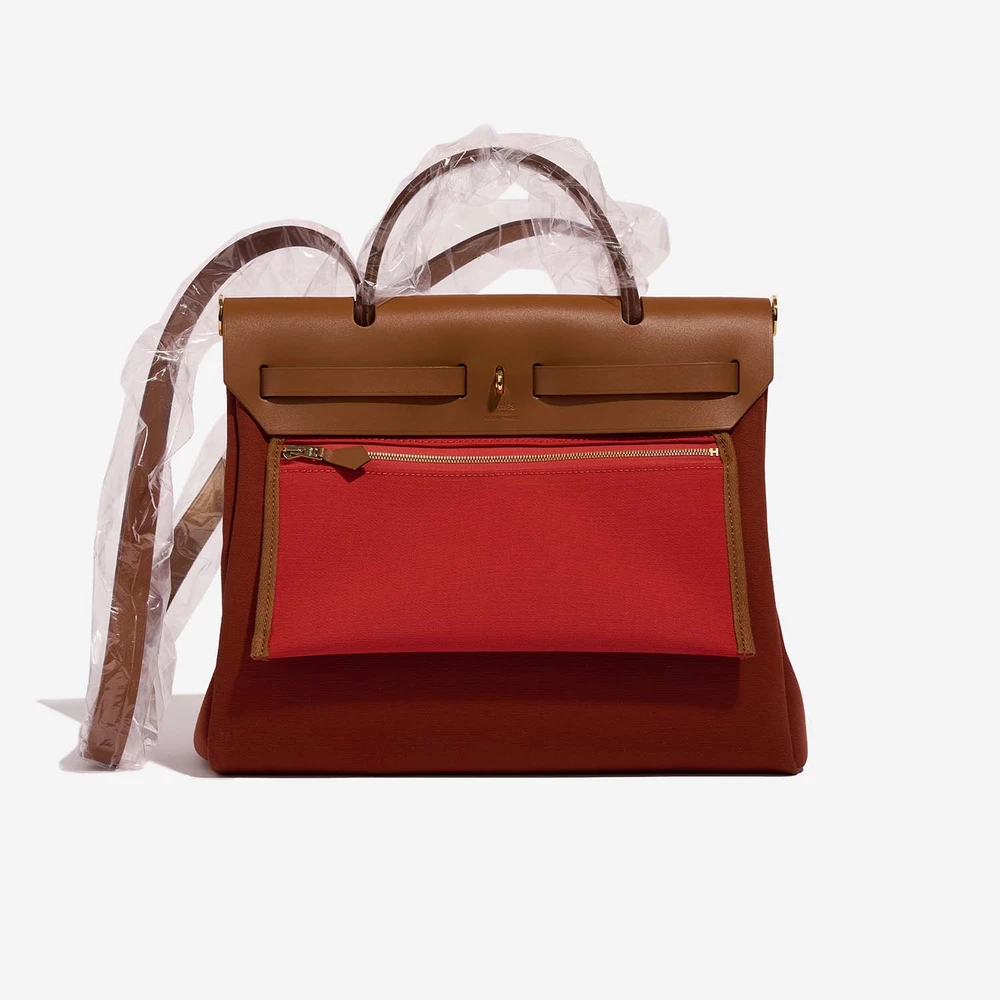
In the pantheon of luxury fashion, few names command the reverence and respect of Hermès. For over 180 years, the French maison has remained the gold standard, not merely for its exclusivity or price point, but for its unwavering commitment to craftsmanship, material integrity, and timeless design. While the Birkin and the Kelly are the undisputed superstars—the icons that grace magazine covers and auction blocks—there exists a quieter, more subversive sibling within the family that deserves equal scrutiny: the Hermès Herbag. Specifically, the Herbag Zip 31 in the Vache Hunter leather and Toile Canvas combination, rendered in the rich, earthy tone of Cuivre, represents a masterclass in utilitarian luxury. It is a bag that does not shout; it speaks in whispers of heritage, practicality, and refined taste.
To understand the Herbag is to understand its origin. Reimagined from the vintage "Hermès Sac Marine" and the "Cabine" bags of the early 20th century, the Herbag was designed to be the antithesis of the rigid, structured handbag. It was born from a world of equestrianism and travel—a world where leather needed to be durable and canvas needed to be resilient. The Herbag Zip 31, introduced in the 1990s and evolving since, embodies this spirit of adventure. It is a bag for the modern nomad, one who appreciates the patina of age and the beauty of function.
The most striking aspect of this specific model is its material composition: the marriage of Vache Hunter leather and Toile Canvas. Let us first deconstruct the leather. Vache Hunter, often referred to as "Vache Naturel" or simply "Hunter," is one of Hermès' most historic and distinctive leathers. It is a vegetable-tanned bovine hide that is renowned for its robust, almost rugged texture. Unlike the smoother, more polished Box Calf or the pebbled Togo, Vache Hunter arrives with a natural, semi-matte finish that feels substantial in the hand. It is a leather that tells a story; it is sensitive to water and light, which means it develops a rich, dark patina over time that is entirely unique to the owner. This is not a leather for the faint of heart; it is a leather for the connoisseur who understands that "character" is the ultimate luxury.
When paired with the Toile Canvas, the Vache Hunter is given a perfect counterpart. Hermès uses a tightly woven, heavy-duty cotton canvas that is exceptionally resistant to wear and tear. This is the material of sails and awnings, re-purposed for the finest accessories in the world. The texture of the canvas is matte and soft, providing a stark yet harmonious contrast to the firm, tactile nature of the Vache Hunter. This combination creates a dynamic tension; the canvas offers a casual, almost bohemian feel, while the leather anchors the bag in luxury and durability. Together, they create a piece that is lighter than a full-leather bag but just as structural.
Now, we turn to the color: Cuivre. In French, "cuivre" translates to copper. However, to describe this hue merely as "copper" is an injustice. Cuivre is a chameleon color that shifts with the light. In the dim morning light, it presents itself as a deep, burnt orange, reminiscent of autumn leaves. In the high, bright sun, it reveals glints of terracotta and warm rust, an earthy red that is both grounding and vibrant. Under artificial light, it takes on a bronze quality, rich with metallic undertones that echo its namesake. This is an unusually warm and saturated color for Hermès, which often leans toward the neutral spectrum of Black, Gold, or Etoupe. Cuivre is a statement of confidence; it is a color for those who appreciate the richness of the natural world, a hue that pairs beautifully with navy, olive, beige, and even emerald green.
The "Zip 31" designation indicates the size and the closure mechanism. The "31" refers to the bag’s width in centimeters—measuring approximately 31 cm by 25 cm by 10 cm. This is a medium-sized bag that is incredibly versatile. It is large enough to carry a daily essential kit (a tablet, a small notebook, a makeup pouch, and a scarf) but intimate enough to not feel cumbersome. The "Zip" is crucial to the design evolution of this model. Earlier versions of the Herbag featured a simple flap closure with straps, akin to the Kelly. The introduction of the central zipper on the Herbag Zip changed the game. It provides a layer of security and convenience that the older models lacked. The zipper opens up the front panel, allowing easy access to the main compartment, while the sides can still be expanded and fastened with the side straps, allowing the bag to be cinched inward for a more compact look or expanded outward for extra capacity.
Functionality is woven into the very fabric of the Herbag Zip 31. The bag is light, which is a significant advantage over its all-leather counterparts. The strap is one of its most delightful features. It features a long, adjustable leather shoulder strap, allowing it to be worn crossbody or on the shoulder. This is a liberating feature. Unlike a Kelly that is often hand-carried, the Herbag is designed to be worn. It is a bag that allows for movement, for navigating crowded streets, for traveling. The wearer is not tethered to their bag; the bag adapts to the wearer. Furthermore, the bag features a back pocket (often a "magic pocket" without a closure) and a front pocket beneath the flap, providing discreet storage for a phone or travel pass.
When considering the target demographic for this piece, it is not the one who wants to signal wealth immediately. A Birkin or Kelly with gold hardware often commands a certain level of recognition that some might find ostentatious. The Herbag is for the "quiet luxury" enthusiast. It is for the woman or man who possesses a discerning eye for craftsmanship. They choose the Herbag because it whispers "I know" rather than screaming "Look." It appeals to the creative professional, the architect, the artist, the traveler. It is a bag that looks equally at home in a gallery opening in Paris as it does in a countryside café. The Cuivre color adds a layer of personality, suggesting a wearer who is not afraid of color but chooses it with intention.
The versatility of this bag is perhaps its most underrated asset. The Herbag is famously "mix and matchable." The canvas and leather combination means it transcends seasons. It is not a summer bag nor a winter bag; it is a timeless bag. In the spring, the Cuivre hue echoes the blooming tulips. In the autumn, it matches the fall foliage. In the winter, it provides a warm pop of color against the grey skies, and in the summer, it glows like the sunset. This is the hallmark of a truly versatile accessory: one that is seasonless and ageless.
Comparing the Herbag to the Kelly, from which it draws its visual lineage, is inevitable but ultimately a disservice to both. The Kelly is an icon of ceremony; it is high-maintenance, requiring rain covers and careful storage to preserve its shape. The Herbag is the anti-Kelly in this regard. It invites wear. The Vache Hunter leather, while it should be kept dry, is designed to age gracefully. Scratches and marks do not ruin the leather; they add to its "patina." The Toile Canvas is similarly low-maintenance; it can be brushed and spot-cleaned. This is a bag for life, not just for the soiree. It is a daily companion.
The craftsmanship inherent in the Herbag is, predictably, extraordinary. Hermès employs a strict, artisanal process. While the Herbag is not entirely handmade like the Birkin or Kelly (which are produced by a single artisan in a "métier" workshop), it is still subjected to the rigorous quality control that the house is famous for. The stitching is impeccable; the saddle-stitch technique, or a close approximation, ensures durability. The edges are painted and sealed meticulously. The zipper is smooth and solid. The subtle details—the D-rings, the clochette holding the keys, the saddle-stitching on the handles—all scream of Hermès heritage.
However, the Hermès game is not just about aesthetics; it is about availability. The Herbag remains a difficult piece to procure at retail, often requiring a relationship with a sales associate and a waiting list. This exclusivity adds to its allure. It is a bag that is not immediately recognizable to the casual observer, but to those "in the know," it is a badge of honor. It signals that the wearer has access to the atelier and the patience to wait for the right combination of materials and colors.
In today's fast-paced, hyper-consumerist world, where "it" bags are churned out on a seasonal basis, the Hermès Herbag Zip 31 stands as a bastion of sustainability and longevity. It is a piece designed to outlast trends. The combination of Vache Hunter and Toile Canvas in Cuivre is not a gimmick; it is an aesthetic proposition rooted in heritage. It asks the wearer to slow down, to appreciate texture, to find joy in the muted sheen of copper-hued leather against the softness of canvas.
In conclusion, the Hermès Herbag Zip 31 is a revelation for the discerning collector. It eschews the heavy-handed branding of the modern luxury market in favor of pure, unadulterated design. It is a bag that promises a journey. The Vache Hunter leather will darken and soften with your touch; the Cuivre color will adapt to your wardrobe; the Toile Canvas will become a familiar companion against your silhouette. It is not a bag that simply carries your belongings; it carries a narrative. It is a testament to the idea that luxury need not be loud to be powerful. For those who understand the alchemy of fine materials and practical design, this is the ultimate accessory—a beautiful, functional, and utterly timeless piece of wearable art.
- Get link
- X
- Other Apps


Comments
Post a Comment